• Activ Right Brain
  • About Dean
  • Designing The Future
  • Speaker
  • Keynotes
  • Blog
  • Art
  • Contact

activrightbrain

  • Activ Right Brain
  • About Dean
  • Designing The Future
  • Speaker
  • Keynotes
  • Blog
  • Art
  • Contact

There's an app for that?

My original Jan 2013 Computer Arts Column: now revised, updated and on ARB

​The internet gave us clients demanding their own version of Amazon.com. Social networks gave us clients demanding their own version of Facebook. Now they all want apps that combine Flipboard, Instagram and Angry Birds. Stop. Just stop. Take a second, slam your fingers in your desk drawer, then we'll talk.

App_icon_square.jpg

Don’t get me wrong, I’m not advocating digital (fingers, not pixels) dismemberment because I don’t like apps. Quite the opposite – I love ‘em. It’s this intimate connection on a personal device that drives millions of smartphone and tablet owners to interact with them on a daily, if not hourly basis.

There are very few situations where an app is less-effective than a website when trying to access information or engage an audience. However, if your website isn’t optimised for mobile browsing or your information would be better suited to a PDF, HTML5 web app or even an iBook, then you shouldn’t be thinking about a native app first.

At our current rate of app proliferation, in a couple of years I’ll be discussing the merits of the latest Crimewatch-sponsored Photo Fit Fat Booth or Gillian McKeith’s Turds With Friends. Brands need to focus and spend their money in the right places but designers and developers also need to push back and tell them where to stick it. So to speak.

This ill-conceived digital targeting hit home when I spoke at the Mobile World conference in Dubai last year. One of the more bizarre moments was a debate between mobile network providers (incidentally, big sponsors of the event) and developers. The premise of the debate was “should Telecommunications companies operate their own app stores?” And this set the alarm bells ringing, in my head, not at the venue.

The Telcos argued they should be able to operate outside the official app stores to avoid 30% loss of revenue and set up their own digital retail outlets. The developers wanted to sell individual apps without a store at all. With no one to physically restrain me, I was free to heckle the panel and inform them they were all idiots and not a single one of them was taking the consumer into consideration. 

Something I frequently tell developers is "Consumers don't give a crap about how complicated it is to build an app, collate all the assets, co-ordinate the contributing parties and steer the product through the Apple review process. They just want to know the end result is stable, looks and works beautifully, features appropriate content and is available through a trusted platform with a single touch and a password". As a result, I don’t get many Christmas cards from developers, but we deliver amazing results by avoiding complacency and putting the consumer first.

We’ve now reached an interesting point in the evolution of the app. On one hand we have a market voraciously pursuing the development of apps for any brand and any subject at any cost. On the other, we have those that think apps are merely a stepping stone to the next big thing.

As a designer, I spent many years defending Apple during the Jobsless wilderness years with PC devotees mocking me like a child with a melting ice lolly "Apple won't be around this time next year", "Everyone uses PCs, Macs are for the minority (designers)", "You can get Adobe software and Quark on a PC, so why would you use a Mac at twice the price?"

Anyone with a similarly negative opinion of mobile applications needs to sit back and think about what they’re really saying. Apps are neatly packaged software titles and no one in their right mind should be betting against software as a long-term investment. Consumers want the instant gratification of downloading a product direct to their device and syncing content across smartphone, tablet, desktop and TV.

If we take a sensible approach to the way we develop and the digital strategies we adopt, apps will continue to provide ‘a’ solution, not ‘the’ solution. Designers and developers must also be consultants, demonstrate a willingness to reject a bad idea and steer clients to the most appropriate digital platform – which may not always be an app.

​

​

​UPDATE: When is an app not an app? When it's an iBook of course.

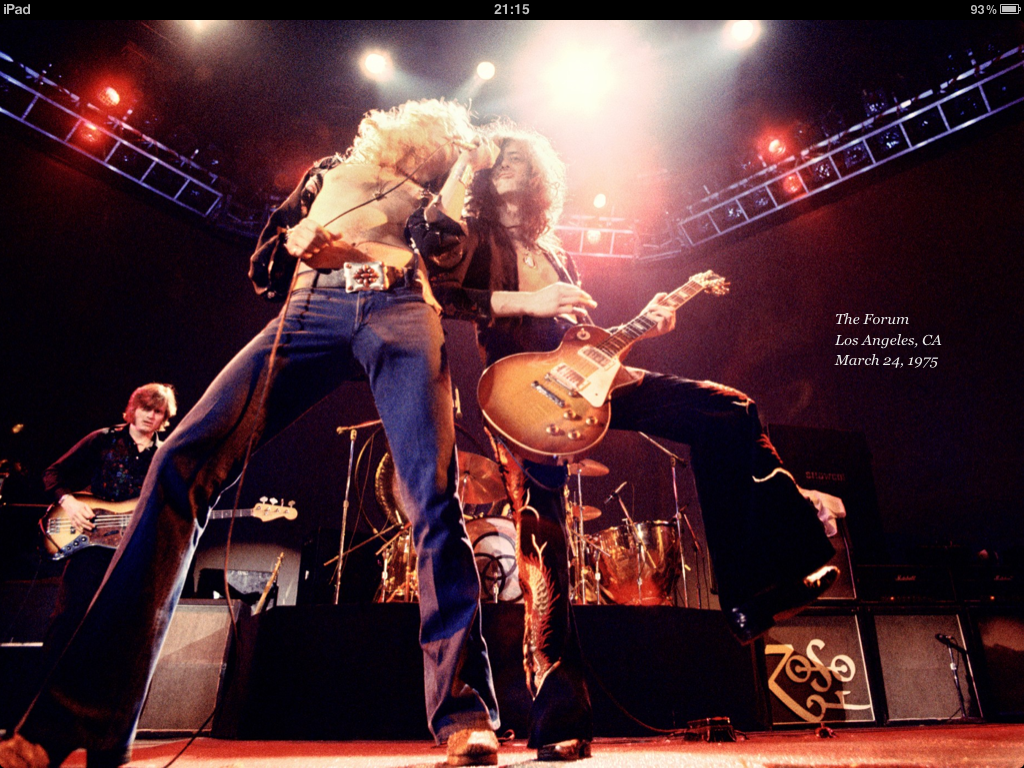
To illustrate the above example, Brandwidth recently launched 'Led Zeppelin: Sound and Fury' with Rhino and Neal Preston.​

When we were tasked with finding the ‘best platform’ for ‘the best photographs’ of ‘the best rock band in the world’ we turned to iBooks Author for ‘the best coffee table book’.

We began working with Warner Music Group eighteen months prior to launch and ahead of the introduction of iBooks Author production software. We soon saw the shortcomings of our initial app build and the benefits of an iBook and swapped platform at a critical time.

Neal Preston’s stunning photography was ideally suited to full screen pinch-zoomed enlargements and galleries within the iBook and we brought the Led Zeppelin portfolio to life with bespoke audio commentary and additional video interviews by Neal and key industry figures.

With over 250 photos, 80 contact sheets, 25 audio commentaries, 11 video interviews, 24 Led Zeppelin set lists and many samples of ephemera and memorabilia our greatest challenge was one of logistics and effective curation.

We created a unique character for the entire project and wrapped the engaging contents in a recognisable brand that would sit comfortably with the army of existing Led Zeppelin fans and those newly introduced via Apple’s iBookstore and iPad range.

This title also introduces in-book music preview and purchase for the first time within an iBook project – just one of many boundaries pushed.
So when is an app still an app? When it's a Door!

Well, 'The Doors' to be exact. An app offered the only framework flexible enough to accommodate the high technological standards of our client – Jac Holzman, one of the world's greatest living innovators and someone we've lived and breathed this project with for over a year.

Jac founded Elektra Records and signed The Doors to the label in 1966 (amongst other highly-respected recording artists) and this app tells the story of the band through an unrivalled collection of ephemera, music and stories with over 45,000 words of text, a graphic novel depicting Jim's arrest in Miami, FBI files, an interactive timeline and map, hundreds of images and, of course... music.

​It's a major step on the road to the evolution of the music box set, but don't take my word for it... here's a superb article by Stuart Dredge for The Guardian and a few words from Jac in the video below.

​

tags: Apps, Apple, iPad, iPhone, Smartphone, Android, Led Zeppelin, The Doors, Jac Holzman, Rhino, WMG, Neal Preston
categories: Apps, art, Books, Celebrity, Design, Digital Publishing, Innovation, iPad Mini, Publishing, Music, iBooks
Friday 05.17.13
Posted by Dean Johnson
 

2013: Future Fiction

What's new for design, technology and publishing in 2013? A valid question but why not resolve to make a difference, rather than predict what everyone else will do.

It's all too easy to find yourself caught up in the present, like a fly in a web, albeit a digital one in this case. Attending to clients with immediate requirements and never allowing yourself time to look further ahead than lunch or the next meeting can lead to a very blinkered approach to work and life.

Future_typewriter.jpg

I am in the fortunate position where my job specifically requires me to daydream, allowing my imagination to wander, looking beyond the present and jumping headlong into the future.

I have always loved the concept of time travel but it's not the vision of future civilisations or making history tangible that intrigues me, I'm fascinated by the impact of our actions and the rebuttal of inevitability. I don't believe in fate and I have never subscribed to the theory that our lives are in any way shape or form planned for us. If they were, why even bother to climb from our beds in the morning? Why take a different route to work? Why try to shape a business or industry for the better when the end result is written in stone.

Stephen King explored the obdurate past in his novel '11.22.63', stubbornly trying to reassemble itself into a network of intersecting lines that results in the same conclusion, the same historic path, the same planned inevitability. The challenge lies in breaking these strands to change the course of history.

OK, as the option to change the past isn't currently available to us, let's focus on the future as this lies in the hands of individuals prepared to write the history books and create 'Future Fiction'. You don't have to be an author, but someone with a passion to create a narrative for history, rather than slavishly follow focus groups or base all resources on developing multiple-choice products. In order to create and shape demand, you need to define the criteria and the product yourself.

Apple's 'Think Different' slogan is as powerful today as it was when this inspirational ad aired in 1997.

From Albert Einstein to Martin Luther King, Jim Henson to Steve Jobs himself, these were individuals with strong personalities and conviction, carving out deep impressions in the very fabric of history. 

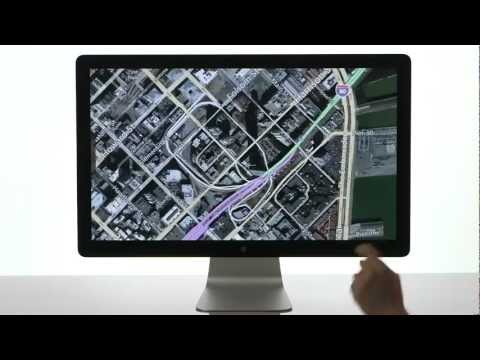
The author Philip K Dick is a great example of a 'fictional innovator' – he gave us incredible glimpses of the future with classics such as Blade Runner, Total Recall and Minority Report. A recent comment on Twitter referred to Minority Report as pure fiction that should be treated as such. Well, we may not be exploiting precogs, but we're certainly using Tom Cruise's gestural interface. Several years ago Brandwidth worked on some stunning gestural interaction and 3D plasma screen projects for Toyota, so we've been used to keeping in line with fiction in order to keep clients ahead in the 'real world'.

2013 offers us more tools than ever before to bring the future into focus. Watch out for wearable technology and a return of gestural interfaces, powered by great hardware such as Leap and Microsoft's Kinect. When scale is important, we'll move beyond touchscreens and bring digital content into our physical environment. Don't worry, that doesn't make your smartphone and tablet obsolete, just open your minds to TVs, shop windows and car interiors that need you to wave your arms around.

This is an exciting time to make a digital difference in a physical world. Don't settle for today, when tomorrow has yet to be shaped. Get out there and write the future, don't sit back and read it.

tags: Stephen King, Apple, Steve Jobs, Minority Report, Albert Einstein, Blade Runner, Total Recall, time travel, Leap, Brandwidth, Tom Cruise, Jim Henson, Think Different, Toyota, Microsoft Kinect, Martin Luther King, Philip K Dick
categories: Automotive, Innovation, Books, Gadget, Design
Tuesday 12.18.12
Posted by Dean Johnson
Comments: 4
 

Warning: Convergence ahead

In the future, we'll all be using a single device for work, rest and play – true? Well, the tech giants parading their goods at the recent IFA consumer electronics show believe they can deliver this technological utopia by the end of the year.

iPhone5.jpg

Sony, Toshiba, Samsung and Dell all revealed Windows 8 tablet/laptop hybrids with a combination of pens, rotating touch screens and keyboards. Great, one device fits all so this must be the future! Hold on, take a deep breath and stand back for a moment…

Apple's current line-up includes svelte laptops (slimline Airs and powerful MacBooks), the new slimmer, longer and faster iPhone5 and iPod Touch and the iPad family (more on that next month). They don't seem to be combining this lot into one device – far from it. Rather than build a single device that tries really hard to be everyone's friend like an enthusiastic puppy, they offer us a range of products that perform the best job in any given situation.

I remember clearly having an 'exchange of views' via LinkedIn prior to the launch of the first iPad. Someone had a strong opinion regarding the necessity of a stylus for the forthcoming tablet and how Apple couldn't afford to launch without one. My point was that the strength of the iPad would lie in its ability to work perfectly without the need for any extraneous peripherals – i.e. a stylus or keyboard. Both my hands feature built-in screen activation devices and the digital interpretation of a physical keyboard works effectively enough.

The iPad still functions beautifully without the need for extras and it certainly benefits from the additional weight and bulk saved. I've typed this whole article on my laptop and haven't once felt the need to touch the screen although I'd be happy to invest in a multitouch iMac (which designer wouldn't want a digital drawing board and hands up players looking for the ultimate gaming table).

The new iPod Touch is aimed firmly at the gaming market, likely to induce a final Nintendo DS death rattle and provide a superb touch and-tilt controller to accompany Apple devices across the range, from iPads to iMacs to Apple TV. More device sales, less convergence.

I'm not saying convergence isn't a good thing – it is. It's just that the technology we're being offered isn't up to the job. I want a smartphone that weighs less than my e-ink Kindle, folds out to the size of a tablet with a gestural table-top keyboard and the power of a laptop. Anything else is a compromise.

Nokia, Motorola and Amazon presented their latest devices this week and none of them were trying too hard to offer something their audiences don't want or need so they get brownie points for that. Nokia and Motorola however lose points (and $millions wiped of their share price) for showcasing hardware we can't actually buy yet.

This is just the beginning of the middle as we head deeper into gadget launch season. Nokia are still making phones, Amazon and Kobo have strengthened their positions in the e-Reader and tablet markets and laptop manufacturers are facing an identity crisis. Apple have shown their latest hand with another card in their back pocket for next month.

Design and innovation have key roles to play in this: Design = how it looks and feels, Innovation = how it works and empowers. Watch this space...

tags: iPad, Motorola, Apple, Microsoft, Nokia, Windows 8, IFA, Design, EarPod, Tablet, Innovation, Sony, Gadgets, Toshiba, iPod, Samsung
categories: Innovation, iPad Mini, Gadget, Digital Publishing, Design
Friday 09.07.12
Posted by Dean Johnson
 

The Ultimate Agency

​Imagine the creative output if the world’s top minds collaborated on a daily basis to run The Ultimate Integrated Agency. Creativity takes many forms, from entrepreneurial business minds and innovative strategists to visionary designers from many disciplines. I’ve decided to bring a personal selection together to see if my Magnificent Nine make a winning combination or a recipe for disaster.

​

I’m not suggesting for one moment that this collection of egocentric individuals would last a week in business together, but let’s suspend belief and focus on the potential.

Some are pretty obvious choices and others less so, but they wouldn’t have made the interview if I didn’t admire their work. The following role call illustrates my top virtual selection for ‘The Ultimate Agency’...

Steve Jobs
​
{ CEO }

​

What I’ve not alluded to is whether The Ultimate Agency is a start-up, successful ongoing project or a business in need of a change of direction. Not a problem for our CEO, as Steve Jobs has had experience with all three. The charismatic, single-minded leader of the Apple empire co-founded the whole operation in 1976, took it to the brink, left, returned in 1997, regrouped and hasn’t looked back since.

With some of the most committed brand evangelists in the business Apple’s products almost sell themselves. However, without Jobs leading from the front and his shared vision with Jony Ive, the company wouldn’t be where it is today. I’d hate to see Microsoft’s Steve Ballmer screaming up and down the stage at a keynote, promoting anything from Apple as they just wouldn’t be the same products anymore. You’ll not find any current Microsoft employees in my Ultimate Agency list, the Windows 7 launch party TV ads would have hammered the nail in that coffin.

Jason Calacanis
​
{ Business Acquisition and Development Director }

​

I want someone in this role willing to drive the agency (and the clients) forward into new markets with a thorough understanding of each. Jason Calacanis is a US entrepreneur with a proven track record of starting, developing and profitting from very successful businesses.

The potted history begins in 1996 when Calacanis started the Silicon Alley Reporter (sold in 2003), next founding Weblogs, Inc (sold in 2005), roles as SVP of AOL and General Manager of Netscape followed until founding Mahalo.com in 2007. In 2009 Jason embarked on another venture, the ‘This Week in...’ webTV network, hosting topics from video games, to poker, to comedy to This Week In StartUps, hosted by Jason.

Calacanis’ CV demonstrates a razor-sharp entrepreneurial instinct essential for any business, especially useful in the cutthroat world of the creative industry.

Mitch Joel
​
{ Head of Marketing Strategy }

​

If anyone in the marketing and social media business hasn’t heard of Mitch Joel, then go and look him up. His is the one voice of reason you should be listening to and his blog and book (both entitled Six Pixels of Separation) tell it like it is, not how marketers make it sound.

It can get tiring for most ‘normal’ people to spend time with marketers and it’s easy to resent the influx of acronyms and tech-speak uncomfortably shoehorned into conversation so I’ve chosen Mitch to head up Marketing Strategy for the no-nonsense Ultimate Agency.

Mitch is an inspirational speaker and an effective business generator so will work well with my next appointment to the team...

Stephen Fry
​
{ Client Services Director }

​

Actor, writer, presenter, raconteur, all-round passionate enthusiast and communicator... Stephen Fry is a man of many talents. He ticks all these boxes but they culminate in one compelling reason to include him in my list: A truly great Client Services Director should not only understand and love the business but the business should love them back.

Stop people in the street and ask who they’d invite round for a dinner party and the chances are nine out of ten would have Stephen Fry down for an invite. The Dalai Lama is a worthy addition, but I’d rather discuss the pros and cons of Blackadder, Oscar Wilde and my iPhone with the former partner to Dr. Gregory House. I’m sure clients would feel the same.

Don Draper
​
{ Creative Director }

​

Yes, I know Don Draper is a fictional character, played by Jon Hamm in the award-winning Mad Men, but you’d soon have a go at me for putting my own name forward so Draper gets my vote.

A great Creative Director should be a maverick, with an opinion on everything thrown at them. Sitting on the fence isn’t an option as the team around them are there to put the case for and against the client’s brief. Each job exists to be questioned and challenged, not followed religiously otherwise the role of Creative Director is relegated to that of designer or manager and facilitator, rather than inspirational leader.

Don Draper could never be described as a follower and if he goes off the rails occasionally, his outstanding team is there to ensure the final destination is still reached.

Wally Olins
​
{ Brand Director }

​

If you want to get intimate with the internal workings of a brand, Wally Olins is the man to speak to. Wally is one of the most engaging public speakers I have had the pleasure of listening to. He makes the business of branding interesting because of the stories he recounts regarding his vast experience in the subject.

It is this back-story to each brand that marks Wally out as a great – it’s certainly not about a quick visit to the drawing board or Mac but a deep understanding of where a brand stands, where it wants to be and how its audience relates to it.

Wally’s years of experience, from his time with Wolff Olins, to his present position as Chairman of Saffron Brand Consultants have resulted in a folio of satisfied clients, ranging from Volkswagen, BT & Coca-Cola to brand positioning for Poland, Spain and London (for the 2012 Olympics – like it or loathe it!). I think The Ultimate Agency branding would be safe in Wally’s Olins’ hands.

Moritz Waldemeyer
​
{ Head of Emergent Technology }

​

Moritz Waldemeyer may well be the closest you’ll get to a designer living the contemporary rock and roll lifestyle without ever really stepping into the limelight. His incredible LED ‘laser suits’ have made on-stage appearances when worn by Rihanna, OKGO, Mika and U2 as well as hitting the catwalk in collaboration with Hussein Chalayan and Swarovski.

Big brands are now queuing up to work with Waldermeyer, as his combination of technology, art, fashion and design generate live effects seemingly drawn straight from the digital realm. Having trained as an engineer, Waldermeyer’s projects function as planned even if they do have an air of fantasy about them. An ideal combination for the Ultimate Agency – thinking outside the box, but filling it with useful tools.

Thomas Heatherwick
​
{ Architectural Design Director }

​

Although Thomas Heatherwick shares a talent with my next appointment for designing incredible open spaces (and the structures that sit within them), Heatherwick’s focus remains fixed in an architectural direction. His New Bus for London may step on a few toes but Newson’s heart lies with product design.

Heatherwick’s most recent public project, The UK Pavilion at Shanghai Expo 2010, highlights his continuing avoidance of all things conventional. His ‘B of The Bang’ sculpture to celebrate Manchester’s 2002 Commonwealth Games was finally dismantled last year, having never fully opened, after fears over the stability of its huge metal spikes. Some would call it unsafe. I’d call it edgy.

Marc Newson
​
{ Head of Product Design and Development }

​

“No Jony Ive?” I hear you cry. I haven’t faltered in my allegiance to Apple but The Ultimate Agency needs a versatile as well as visionary leader to head up the product category. Jony Ive continues to deliver beautiful objects of desire under the Apple banner but Australian-born Newson doesn’t fly the flag for any one brand. He’s his own man and this shows in the breadth and depth of his portfolio.

As I’ve mentioned above, Newson shares many skills with Heatherwick, however I’m not expecting the two to fall out now they’re working for The Ultimate Agency – quite the opposite, it’s the collaborative fallout that interests me and I’d love to see the results.

The nine creative individuals listed above all epitomise the industry’s pioneering spirit. It’s their kind of risk-taking I’m looking for. There’s always going to be room for ‘safe’ in the world, but safe never scaled Everest, it didn’t reach the moon and it certainly won’t make it through the door of The Ultimate Agency.

tags: Don Draper, Marc Newson, Moritz Waldemeyer, Mitch Joel, Stephen Fry, Steve Jobs, Thomas Heatherwick, Jason Calacanis, Wally Olins, Jon Hamm, Agency
categories: Business, Innovation, Agency, Design
Monday 09.20.10
Posted by Dean Johnson
 
Newer / Older

Designing the Future